Blog
Early Exit activated on first Devon projects

In just six months, Devon has built a solid community of more than 700 active real estate investors, with nearly €5 million already invested in MJL Enterprise projects. To make the investment experience even more flexible and investor-friendly, the Early Exit feature is an important part of Devon investment products. Early Exit functionality is designed with one clear goal - to provide investors with liquidity and greater control over their funds.
As of early October, Early Exit is already active in the first funding projects on the Devon platform.
So how exactly does it work, and what should investors keep in mind when activating Early Exit? We’ll explain everything in this blog article.
How does Early Exit work?
- The Early Exit feature becomes available 6 months after a project is published.
- A lender can request full or partial loan repayment using the Early Exit function.
- Principal repayment occurs only when other lenders fund the same project for the requested amount.
- From the moment the lender activates Early Exit until it is fulfilled, the lender continues to earn interest on the requested amount.
- If a lender with activated compound interest functionality wishes to exit the full amount from a particular project, it must turn off the compound functionality. Otherwise, the principal amount in this project will continue to grow while the amount requested for the Early Exit is pending.
- If a lender has a pending Early Exit request, this lender cannot make a new loan in this project.
- If multiple lenders request an Early Exit from the same project, the requests are processed chronologically - the earliest request is fulfilled first.
- Lenders can cancel their pending Early Exit requests at any time.
- If the request is cancelled after it has already started to be funded, a partial repayment (equal to the funded amount) is made, and the rest stays at the project.
Bonus deduction:
- For the projects published till 23.09.2025 (Terbata Lofts Round 2 is the last one), there is a fixed period during which 50% of the received bonuses is deducted. Once this period has passed, there is no deduction.
- For projects published as of 30.09.2025 (Duntes Park Stage 1 Round 4 is the first), if the Early Exit request is processed before the project's maturity date, the unsecured bonuses will be deducted proportionally to the requested Early Exit amount. The secured bonus is calculated in the following way:
Bonus rate/Total loan period*Loan amount*Days, where:
☑️ Bonus rate - project's bonus rate;
☑️ Total loan period - period from the lending day till the loan maturity date;
☑️ Loan amount - your loan amount applicable with bonus
☑️ Days - days since the lending day
- Once the Early Exit request is processed, the unsecured bonus is deducted from the amount of the processed Early Exit request as a wallet-side specific transaction.
- If the lender exits partially, the unearned bonus is deducted proportionally from the processed Early exit amount.
- In the tax report, the deducted amount is marked as a capital loss.
Referral and Affiliate bonus limitations:
- If the user has a processed early exit, it no longer receives Affiliate bonus or Invitee bonus transactions.
- Subsequently, the Inviter no longer receives the Inviter bonus for its Invitee’s investments if this Invitee has a processed request in any project.
Example
To better illustrate how Early Exit works, here’s a simple example:
On April 10th, 2025, Alex funded the Amber Park project with € 5000. He also received a bonus of € 200 that was compounded, which makes his total outstanding amount in this project € 5200.
The Early Exit function becomes available for this project on October 10th, 2025.
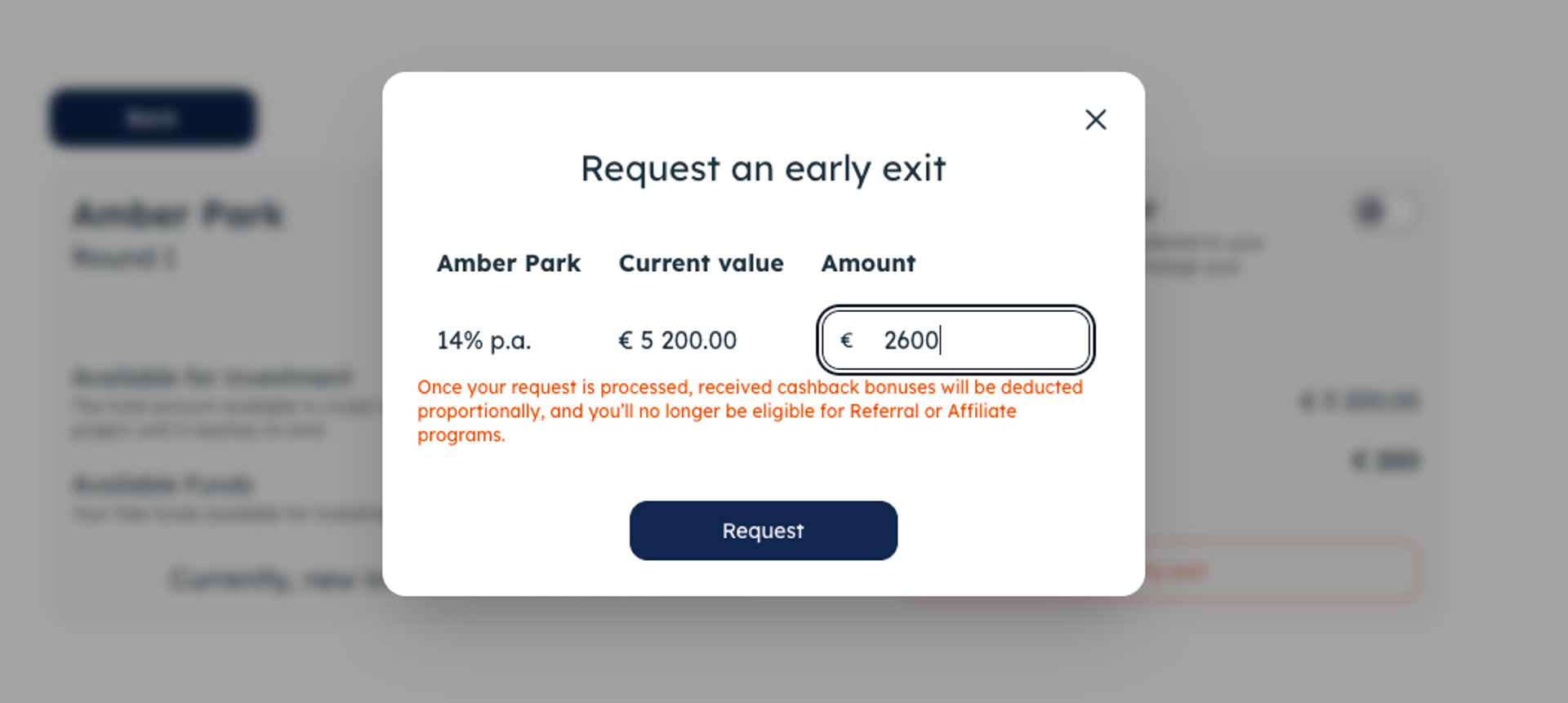
On October 12th, Alex decides to withdraw €2,600 due to unexpected expenses. He activates the Early Exit feature and specifies the amount. Please see the steps below:
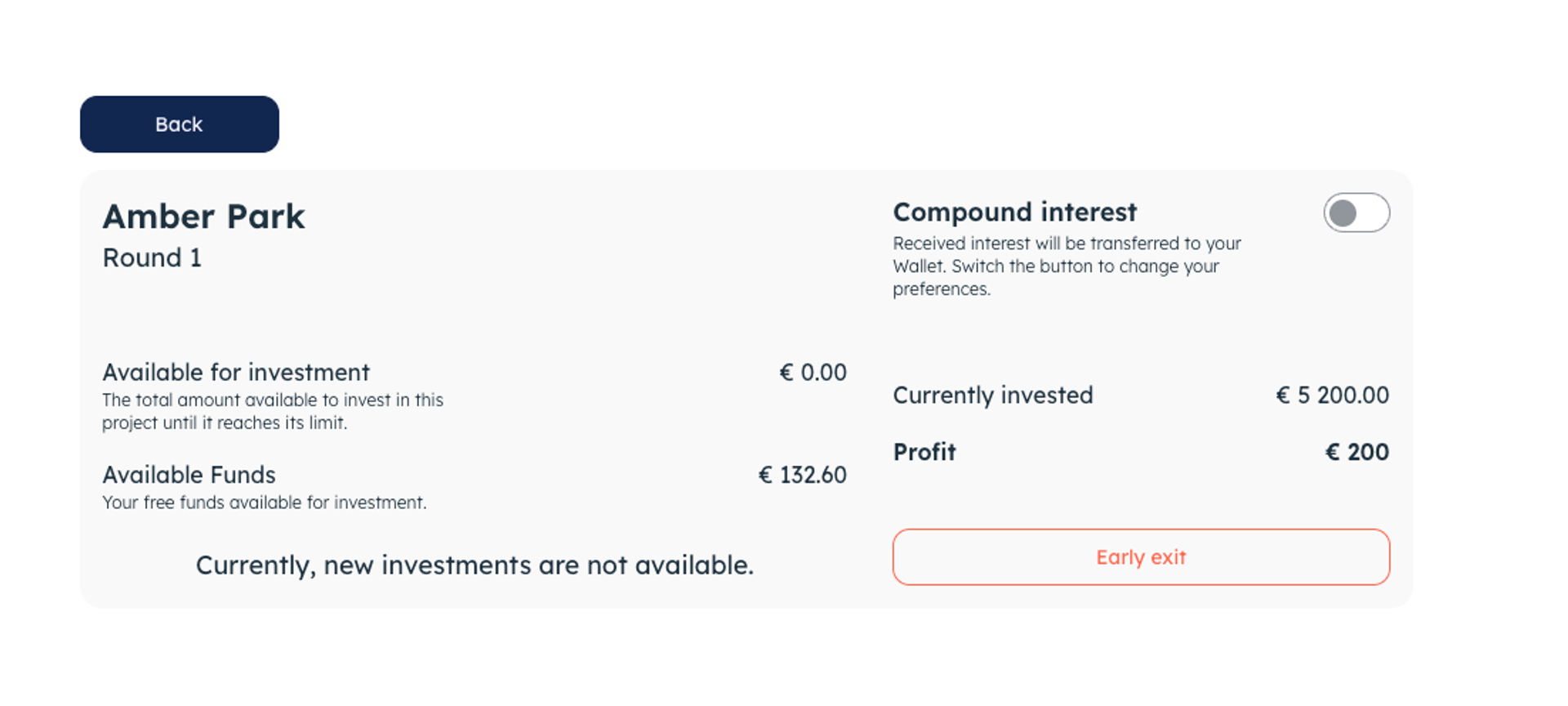
Step 1: Go to the particular project’s investment card and press the Early Exit button:
Step 2: Enter the amount you wish to withdraw from the project and press the Request button:
Step 3: See your pending Early Exit requests:
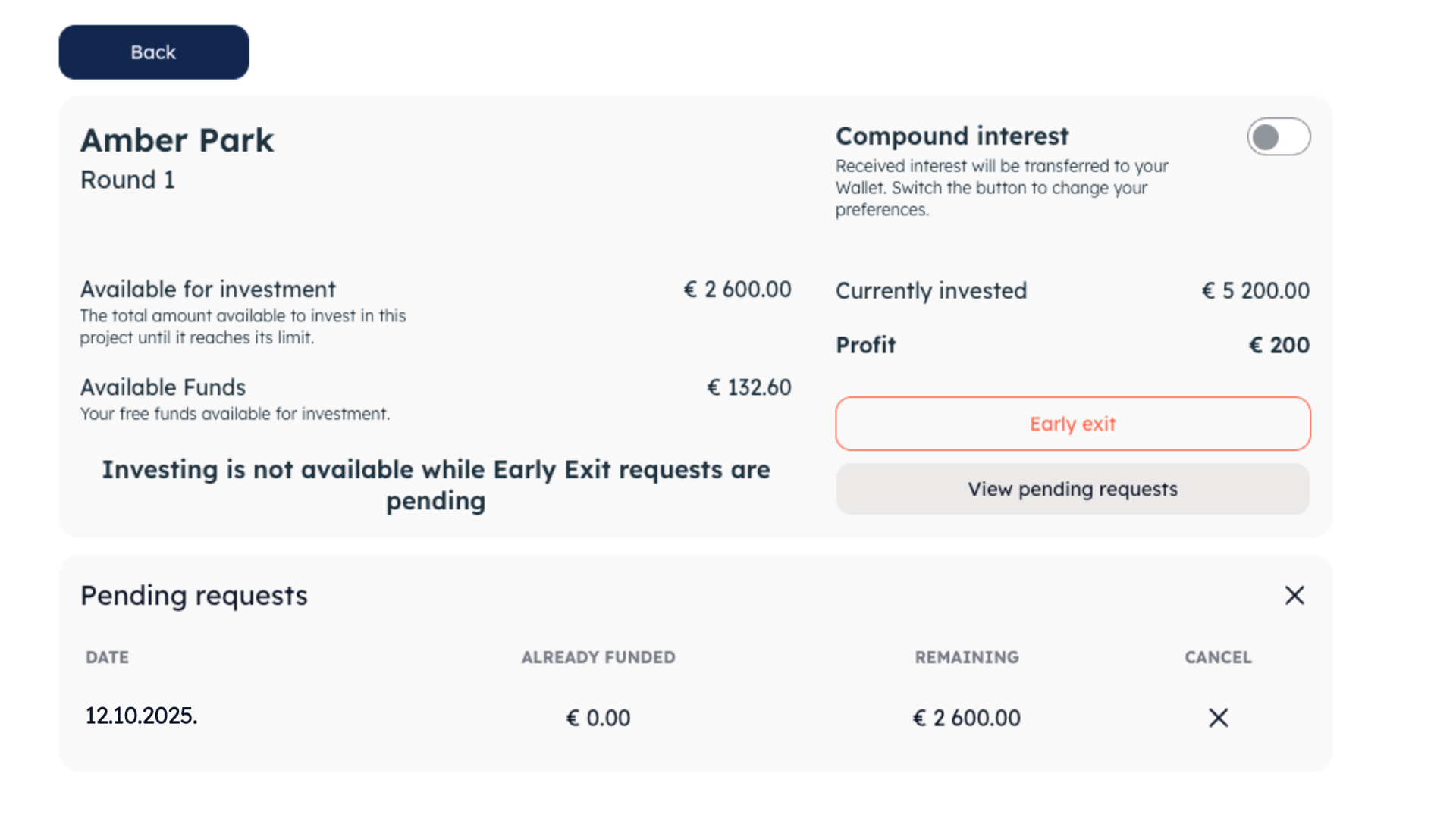
The Amber Park project becomes available again in the INVEST section to other lenders the same day. It now shows an open funding volume of €2,600 (funding volume will be the total amount of all unfilled active Early Exit requests in this project).
Alex continues to earn interest on the whole amount (€5,200) while his request is pending.
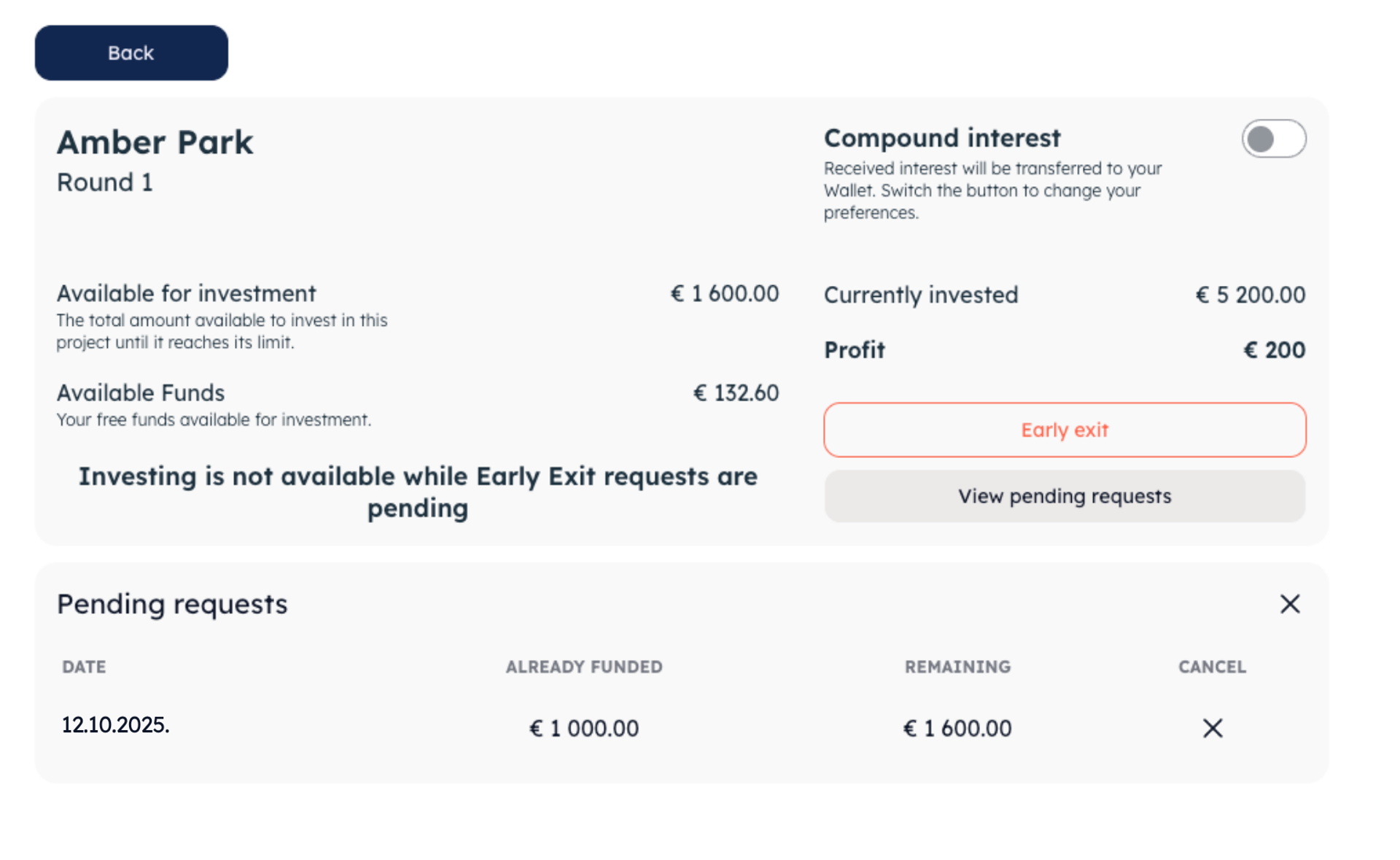
On October 13th, another lender, Maria, funds €1,000 into the Amber Park project. Alex remains an option to cancel the part of the request that is not yet filled in.
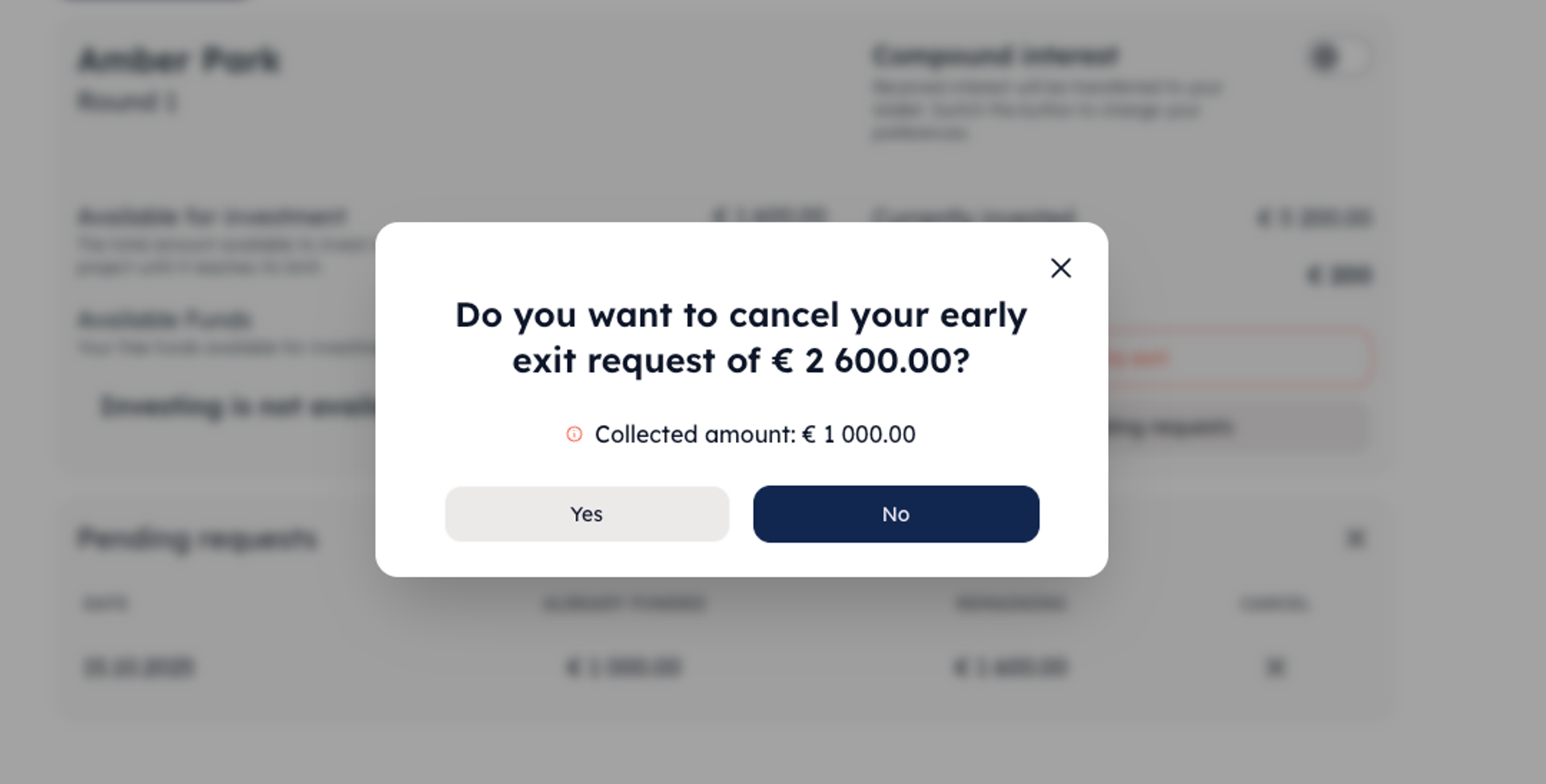
On October 14th, Alex continues to earn interest on the full requested amount.
On October 15th, the lender, Marco, funds the remaining €1,600, and Alex’s Early Exit of €2,600 is now fully completed. After receiving it in the Wallet, 50% of the bonus for the requested part is deducted (€ 50).
You may like these articles

Operations overview / September
The first month of autumn is behind us, and we continue to actively work on MJL Group’s projects and funding developments. September brought further progress across construction projects, alongside continued work on strengthening platform's legal and regulatory framework, including a positive legal assessment from KPMG Germany.

Operations overview / August
August was an important month for Devon, with progress across both the platform’s regulatory foundation and its underlying development portfolio. A key milestone was the publication of the KPMG Germany legal opinion, providing further clarity on Devon’s loan structure and its treatment under German regulatory requirements.

Executive Summary - KPMG Germany Legal Opinion
KPMG Germany has conducted a legal assessment of Devon’s loan structure and contractual framework under the applicable German regulatory requirements, with particular focus on whether Devon could be classified as conducting deposit-taking business. Below is a summary of KPMG’s general findings and regulatory conclusions.